Nikon 70-300mm VR
FX AF-S f/4.5-5.6 G (2006-2017)
Intro Specs Performance Recommendations

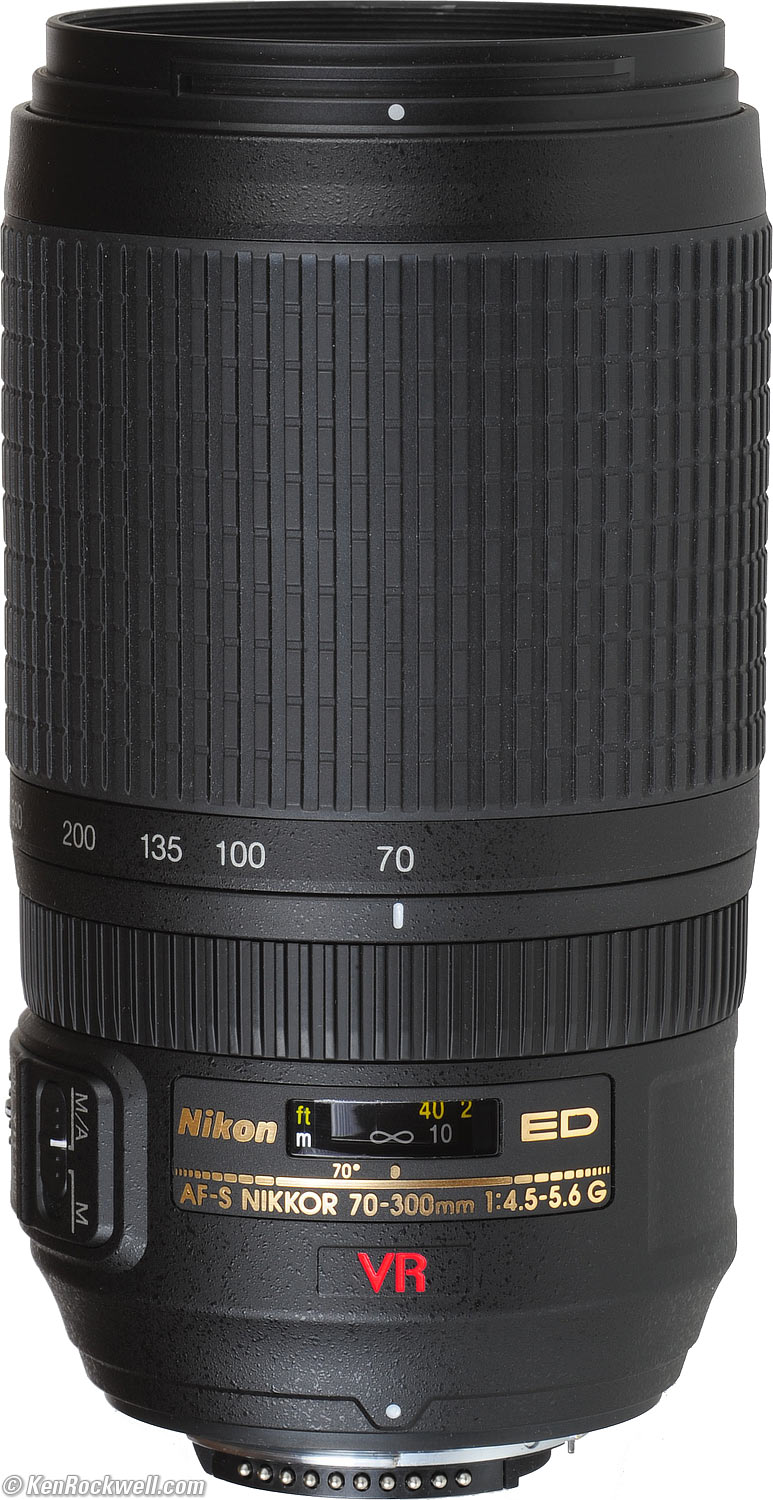
Nikon AF-S 70-300mm f/4.5-5.6 VR (FX, DX and 35mm coverage, 67mm filters, 26.2 oz./745g, 5'/1.5 m close focus, about $195 used if you know How to Win at eBay). bigger. I'd get it new at Amazon, used at KEH or used at eBay.
This all-content, junk-free website's biggest source of support is when you use those or any of these links to approved sources when you get anything, regardless of the country in which you live. Thanks for helping me help you! Ken.
May 2025, August 2023, April 2018 Nikon Reviews Nikon Lenses All Reviews
Sample Images from California's Central Coast June 2010
NEW: 70-300mm VR AF-P FX and 70-300mm VR AFP DX are newer versions, but they only works on the newest cameras.
Introduction top
Intro Specs Performance Recommendations

I buy only from these approved sources. I can't vouch for ads below. |



This Nikon 70-300mm VR was the latest of many 70-300mm range zooms from Nikon back in 2006, and today is replaced by the 70-300mm AF-P VR DX or 70-300 AF-P VR FX which have faster autofocus but little to no compatibility with older cameras.
Please read the rest of this review knowing I wrote it in 2006 before the newer lenses existed.
This lens was the first 70-300 to add Vibration Reduction (VR) to eliminate the need for a tripod, AFS focusing to allow instant manual focus override, and several hundred dollars in added expense. It's the only 70-300mm range lens that will autofocus on the D40, D3000, D60 and D5000.
For FX and film, this was my favorite tele zoom because it weighs less than the f/2.8 lenses and less than the 80-400mm VR.
This 70-300mm VR is the very best modern tele zoom lens to get if you prefer a dedicated tele zoom over a do-it-all zoom and want light weight and moderate price.
It's a nice semi-plasticy amateur lens with a metal mount. If you need tougher, spend twice as much on the fully professional 80-200mm f/2.8 AF-D for $1,100. If you can do without VR (I can't), get the non-VR 70-300mm G for $150.
For DX, if you already have the Nikon 18-200mm VR, I won't bother getting this lens, too, since most of the range is already covered by the 18-200mm.
Compatibility
This 70-300mm VR G AFS lens works perfectly on all digital cameras, and most autofocus film cameras made since about 1990.
It's a G-type lens with no aperture ring. It won't work on any manual focus camera.
See Nikon Lens Compatibility for more. Look in the G and the AF-S columns; you get the least of the features mentioned.
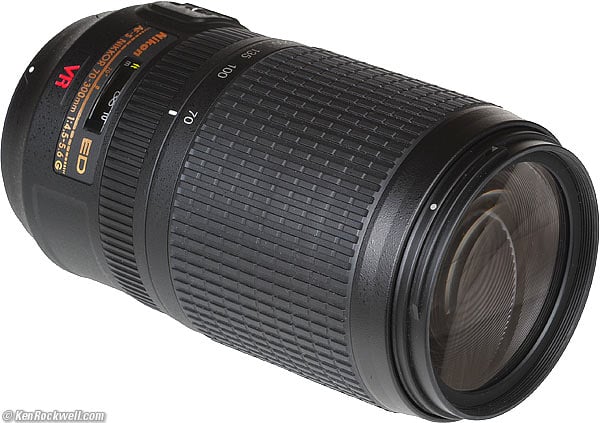
Nikon 70-300mm VR. bigger.
Good News:
1.) Very sharp from 70-200mm.
2.) VR, which means you leave your tripod at home.
3.) Low distortion.
4.) Big, fat zoom ring.
5.) Evenly spaced zooming - no bunching up at either end.
6.) Easy manual focus.
7.) Fast autofocus.
8.) AF is very accurate.
Bad News:
1.) Plasticy barrel, but that's how we get the low weight I love.
2.) Plasticy, sticky zoom feel.
3.) VR makes a weird water-running sound. I can feel it through the camera body as it runs. (Other VR lenses merely hiss.)
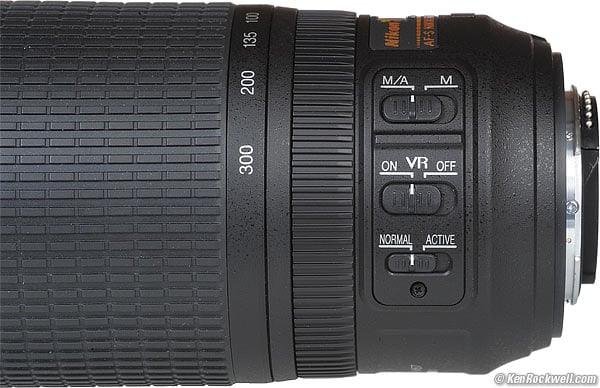
Switches: Nikon 70-300mm VR.
Specifications top
Intro Specs Performance Recommendations
Name
Nikon calls this the Nikon AF-S VR Zoom-Nikkor 70-300mm f/4.5 - 5.6G IF-ED
AFS: Quiet AF and instant manual focus override. Just grab the focus ring.
VR II: Vibration Reduction, new version. This means you can get sharp pictures without a tripod. Nikon claims four stops sharper.
G: No aperture ring. Only works on cameras newer than about 1992.
IF: Internal Focusing. Nothing moves on the outside of the lens when it focuses.
ED: Magic glass for sharper images
SWM: Silent Wave Motor for fast, quiet focusing.
All this and more explained in greater depth on my Nikon Lens Technology page.
Focal Length
70-300mm.
If used on a DX camera, it gives a field of view similar to the field of view of a 105 - 450 mm lens used on FX or 35mm film. (see Crop Factor.)
Maximum Aperture
f/4.5 - 5.6.
Optics
17 elements, 12 groups, including two ED glass elements.
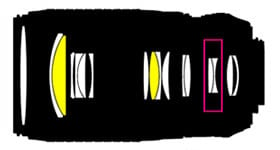
The yellow elements are ED. The red box shows the VR group.
Diaphragm
Lovely 9 blade rounded.
Stops down to f/32 - 40.
Don't ever stop down this far because diffraction will give you very soft images.
Filter Thread
67mm.
Plastic.
Doesn't rotate.
Close Focus
4.5' (1.37m), actually measured, from image plane (back of camera).
Maximum Reproduction Ratio
1:4.
Size
3.1 x 5.6" (80 x 143.5 mm).
Weight
26.260 oz (744.4g), as measured by me, naked (the lens, not me).
Hood
HB-36 plastic bayonet, included.
Case
Soft case included.
Nikon Product Number
2161.
Announced
09 August, 2006.
Shipping Since
10 December 2006.
Price, USA
About $467 new at Amazon, about $265 ~ $319 used at KEH or about $195 used at eBay if you know How to Win at eBay, May 2025
About $150 used if you know How to Win at eBay, August 2023.
About $250 used if you know How to Win at eBay, March-April 2018.
$497 new or about $300 used if you know How to Win at eBay, October 2017.
$587, November 2014.
$587, May 2013.
$520, October-November 2010.
$540, August, 2010.
RATED MTF
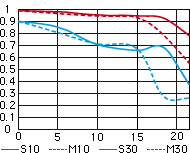
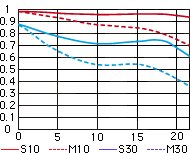
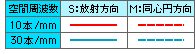
Performance top
Intro Specs Performance Recommendations
Autofocus Bokeh Color Fringes Construction Distortion
Falloff Film Filters Flare Flash Focal Lengths, actual
Macro Serial Number Sharpness Sound VR Warranty Zooming
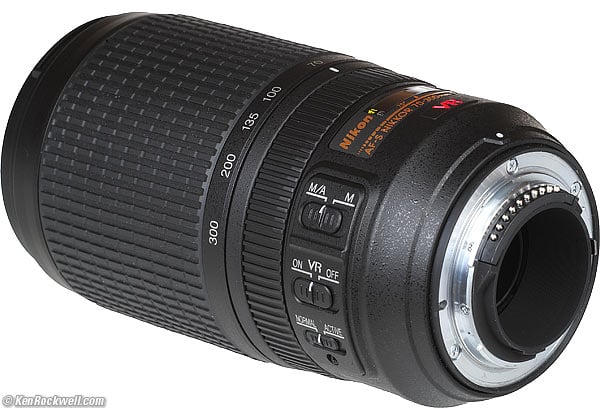
Nikon 70-300mm VR.
It performs better than any of the previous 70-300mm lenses.
This is the lens to get if your subjects hold still. If you need to shoot moving things in lower light, get the faster 80-200mm f/2.8 AF-D instead. If size, weight and cost are no object (they are for me), get the 70-200mm VR or 70-200mm f/2.8 VR II.
FOCUSING back to Performance or back to Introduction.
Autofocus is as fast as my super-fast 80-200 AFS.
If you start off completely out of focus (subject at 6 feet and lens at infinity for instance) you may need to move it manually to get it started, and if it's way out of focus it may first focus in the wrong direction, bounce off the stop and head back the other way to acquire your target. So long as you're in the right zone, focus is fast!
Speed
It's as fast, or maybe a little slower, as the 18-200mm VR.
It's much faster than the pokey 80-400mm VR and the other 70-300mm class lenses.
It's as fast as my super-fast 80-200 AFS.
It's still not instantaneous as the Canons are, but it's much more accurate and consistent.
Sound and Noise
Focus is almost silent.
Manual Focus: Plastic on plastic.
Autofocus: About the same.
Ease of Manual Focusing
Excellent. One firm fingertip can move the always-on manual focus ring.
Autofocus Accuracy
AF is dead-on at all focal lengths.
It's slower than Canon and it may be pokey at times, and the good news is that every shot comes out perfect.
Focus Breathing
Breathing is a motion picture term which refers to what happens as you pull (change) focus from near to far.
This Nikon 70-300mm VR changes magnification a little as focused.
BOKEH back to Performance or back to Introduction.
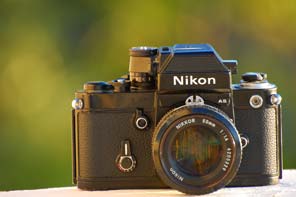
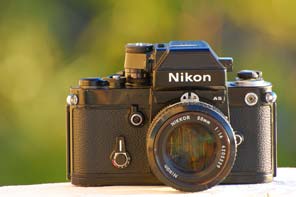
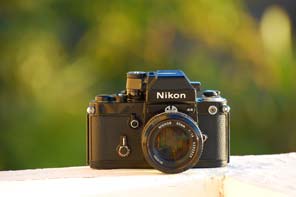
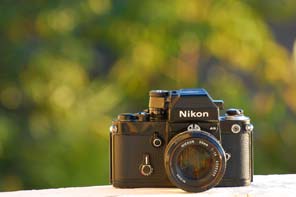
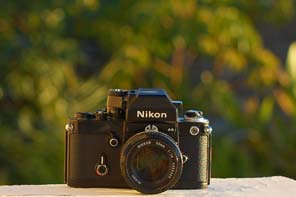
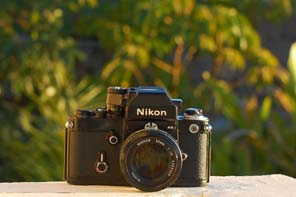
Bokeh is neutral and much better than my 18-200mm VR. Here are complete images at the longer focal lengths shot on DX. The subject was 10 feet (3m) away.
At 100mm I cropped and show only the middle 50% of each dimension, resulting in twice the magnification of the other images. At 70mm I took the middle third of each dimension, or triple the magnification.
 |
 |
Full image, 300mm at f/5.6 |
Full image, 300mm at f/8 |
 |
 |
Full image, 200mm at f/5.3 |
Full image, 200mm at f/8 |
 |
 |
Full image, 135mm at f/5.0 |
Full image, 135mm at f/8 |
 |
 |
2x image, 100mm at f/4.8 |
2x image, 100mm at f/8 |
 |
 |
3x image, 70mm at f/4.5 |
3x image, 70mm at f/8 |
COLOR FRINGES
(Lateral Chromatic Aberration or LCA)
back to Performance or back to Introduction.
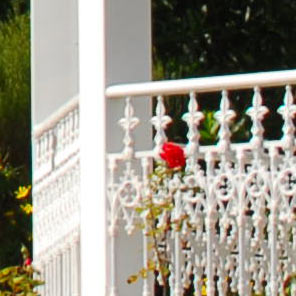
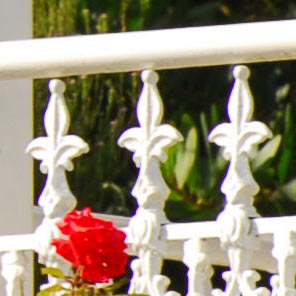
It has none on any modern Nikon introduced since about 2006.
On older generation cameras, it has just a little at the longest focal lengths. This lens is approved by the PPLFPA, Professional Patio and Lawn Furniture Photographers' Association, with a grade of "B." On Gen 2 cameras, it has none.
Here are the full DX guide images from which the crops are taken:
 |
 |
Full DX Image, 70mm |
Full DX Image, 300mm |
|
 |
100% crop from D200 at 70mm |
100% crop from D200 at 100mm |
|
 |
100% crop from D200 at 135mm |
100% crop from D200 at 200mm |

|
 |
100% crop from D200 at 300mm |
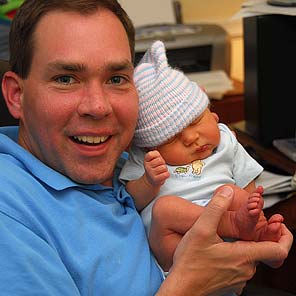
Ryan Rockwell helping me do this. |

These crops are unsharpened and taken from Large Basic JPG originals.
Since I shot at five focal lengths, not 4, I had an extra spot open in this layout so I added a snap of me and the baby working on this. That's what you get for reading a noncommercial website!
back to Performance or back to Introduction.
It has a rubber gasket on the lens mount to keep crud out of your camera.
Exterior: Plastic.
Barrels: Plastic.
Filter Threads: Plastic.
Focus Ring: Ribbed hard plastic, only very slightly rubbery.
Markings: Paint. Gold metal nomenclature plate.
Switches: Plastic.
Mount: Metal.
Internals: Mostly metal with some plastic.
Noises when shaken: Lots of klunking. This is normal.
Made in: Thailand.
DISTORTION back to Performance or back to Introduction.
Distortion on DX is quite good, much better than the 18-200mm VR.
On FX, it has moderate distortion.
Plug these figures into Photoshop CS2's lens distortion filter to correct the distortion for critical use.
Distortion |
FX at ∞ |
DX at 50' (15m) |
|
70mm |
barrel |
+3.0 |
+1.0 |
100mm |
pincushion |
-1.2 |
-0.5 |
135mm |
pincushion |
-3.2 |
-1.2 |
200mm |
pincushion |
-3.5 |
-2.0 |
300mm |
pincushion |
-3.0 |
-0.5 |
© 2009 KenRockwell.com. All rights reserved.
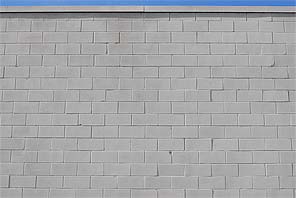
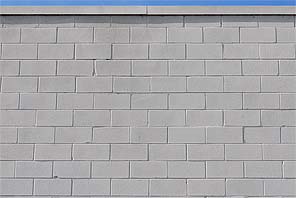
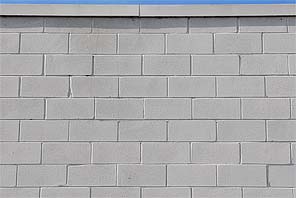
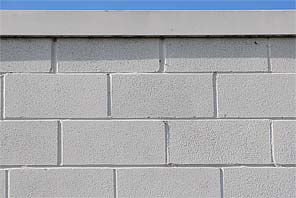
Here's the proverbial Bad Photographers' Wall of Shame as seen on DX:
 |
 |
At 70mm, D200 |
At 100mm, D200 |
 |
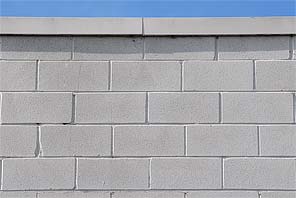 |
At 135mm, D200 |
At 200mm, D200 |
  |
(I bet you thought I'd
put |
At 300mm, D200 |
Here's a larger version of it at 70mm. Move your mouse over it to see it after correction with Photoshop CS2's lens distortion filter per the table below.
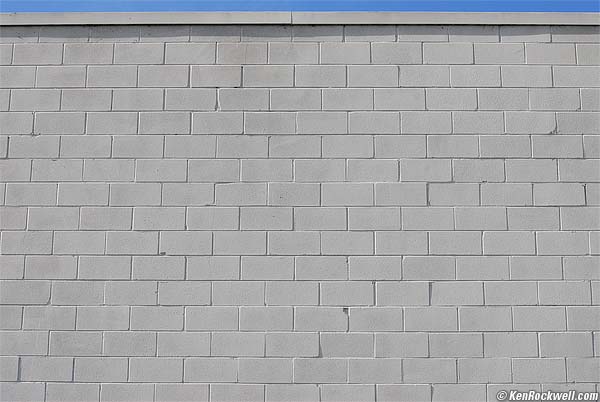
Distortion on DX at 70mm, before and after correction (mouse-over).
back to Performance or back to Introduction.
This 70-300mm VR lens has very little, if any, falloff towards the corners of a DX frame. It is far superior to the 18-200mm VR, which has dark corners at 200mm and f/5.6 on DX.
This is the falloff as seen on a digital camera. It will be worse on film and FX. From what little I tried it, it still seems pretty good on my F100.
These are shots of an Expodisc. This is a tough test which shows even the slightest falloff. You'll never see this in normal photography. Ignore the minor exposure variations between frames.
Even better, I see excellent exposure uniformity between frames.